Sixteen elements decide how a formal trouser looks, functions and lasts. Some are visible at a glance; others reveal themselves only after months of wear. We have marked which details can be seen in the photographs supplied to Options Mall, and which are explained as general tailoring knowledge.
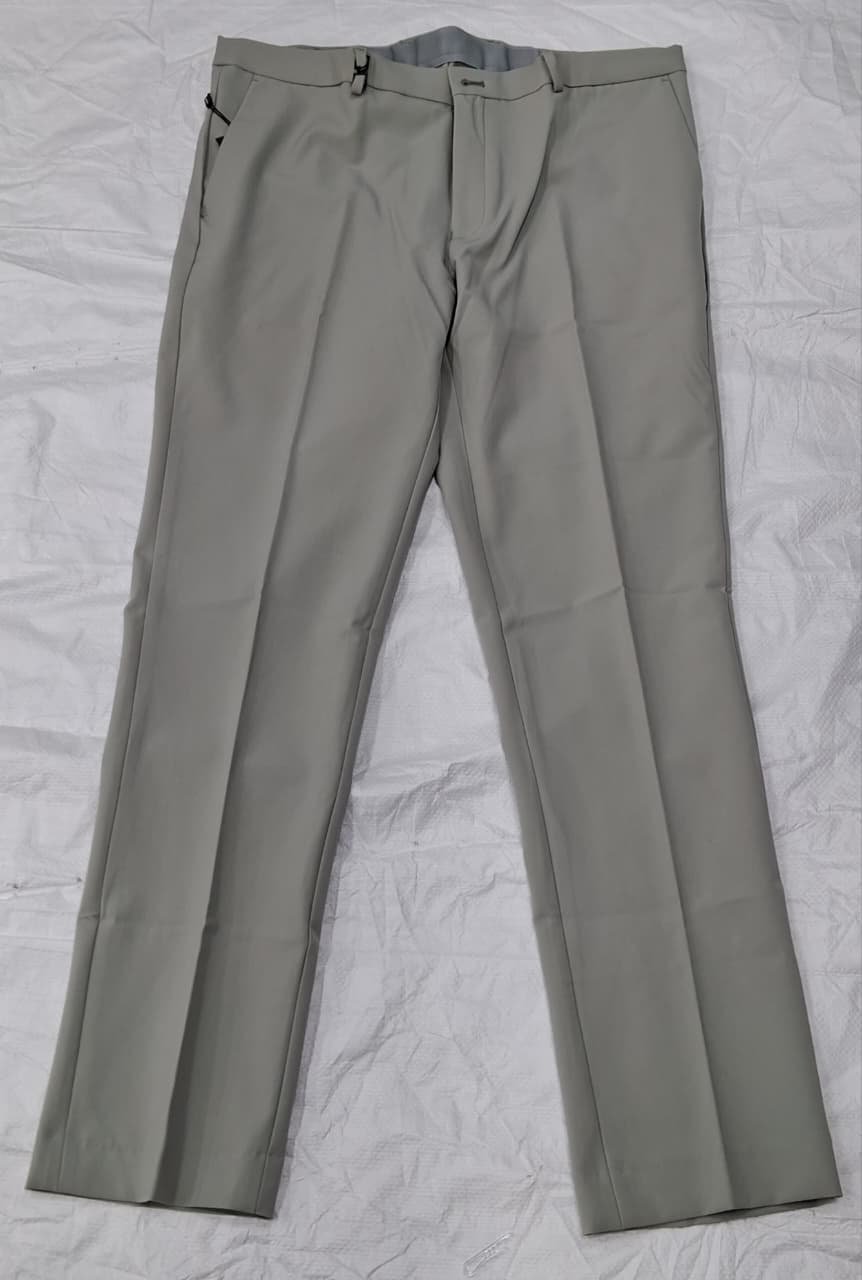
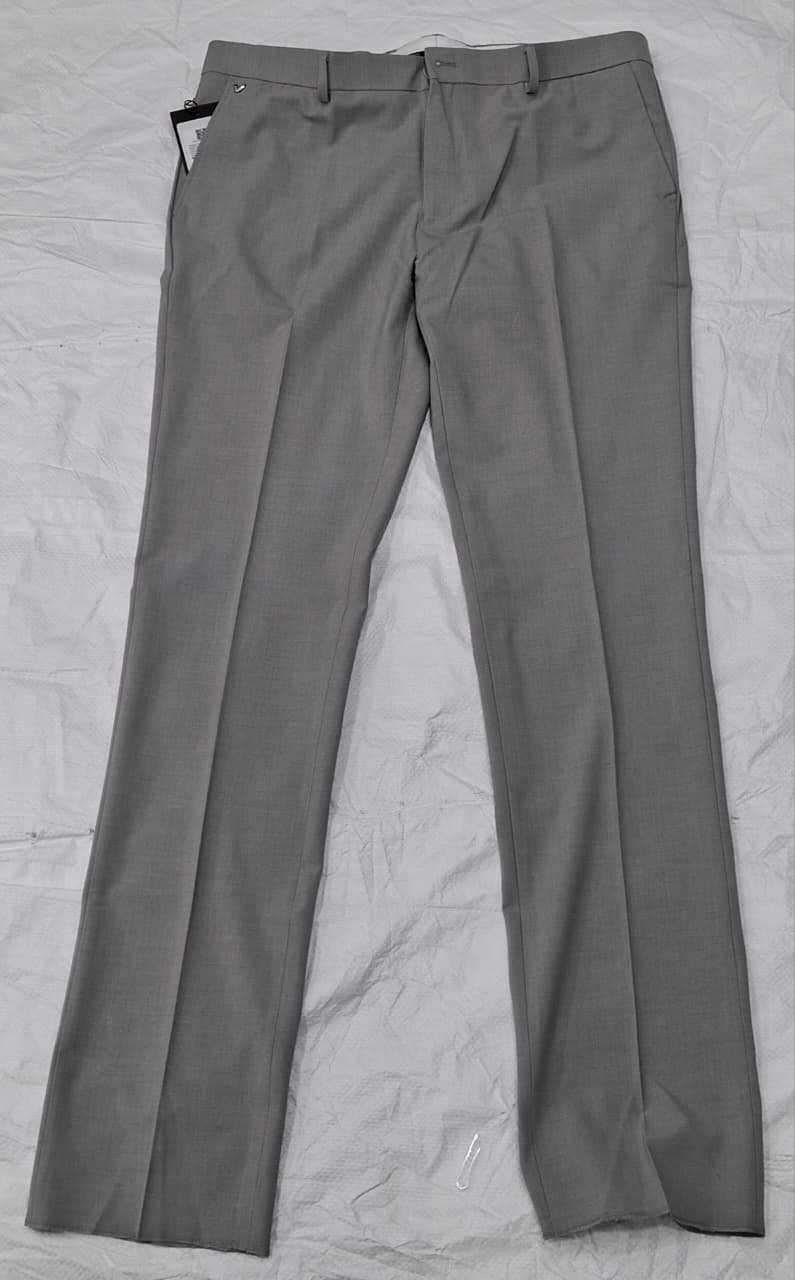
Sage grey trousers: a contrast inner waistband, belt loops and a slanted pocket.
01–04
The waist
Where the trouser meets the body, and where most of its structure begins.
01 Waistband construction
Seen in our photographs
The waistband holds the trouser's shape at the most stressed point. In formal trousers it is normally a separate band, interfaced to stay firm, with a finished inner face. Several trousers in our photographs show a contrasting inner waistband, a sign the inside has been faced and finished rather than left raw. Some tailored waistbands include a split at the centre back, which makes later adjustment easier.
02 Belt loops
Seen in our photographs
Belt loops are typically placed in balanced pairs at the front and sides, with one or two at the back. Their spacing keeps a belt level and stops the waistband rolling. Well-made loops are bar-tacked (reinforced with dense stitching) at both ends so they withstand a belt being pulled through them daily.
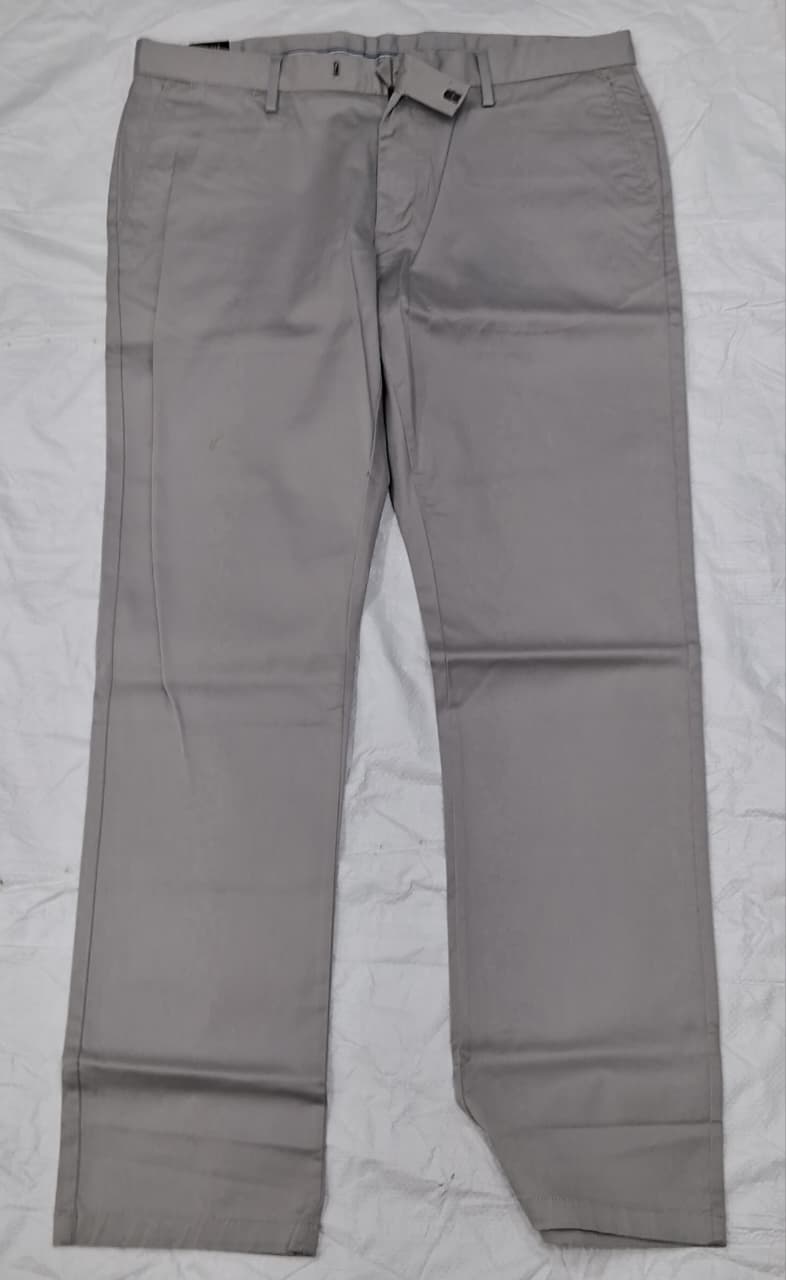
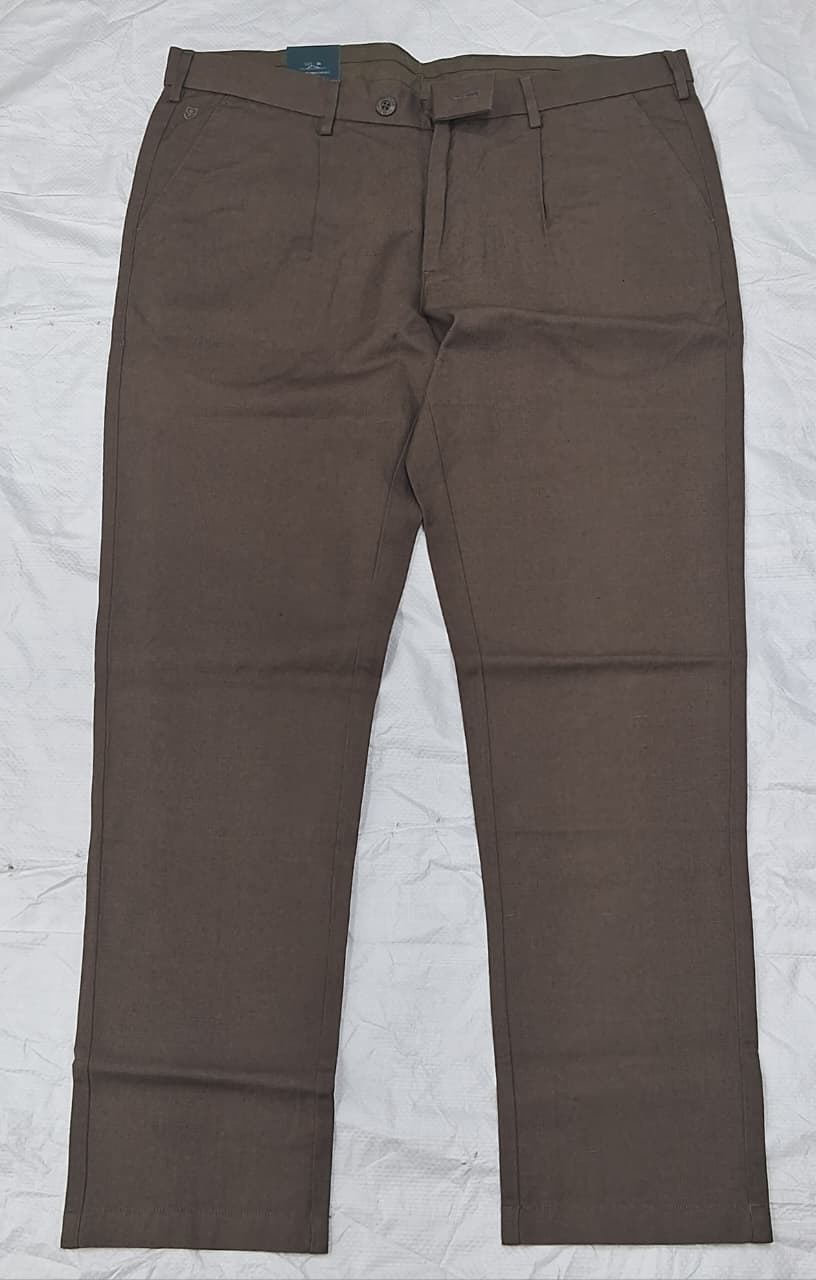
Left: light grey trousers with an extended waistband fastening. Right: brown trousers with a buttoned tab at the waistband.
03 Waist closures
Seen in our photographs
Formal trousers usually close with a combination of a zip fly and a waistband fastening. Many use an extended waistband tab that crosses the fly and fastens with a hook-and-bar, a button, or both. The extension spreads the strain across the front and creates a clean line without a visible button. Several of our photographed trousers show this extended tab.
04 Button and fastening details
Seen in our photographs
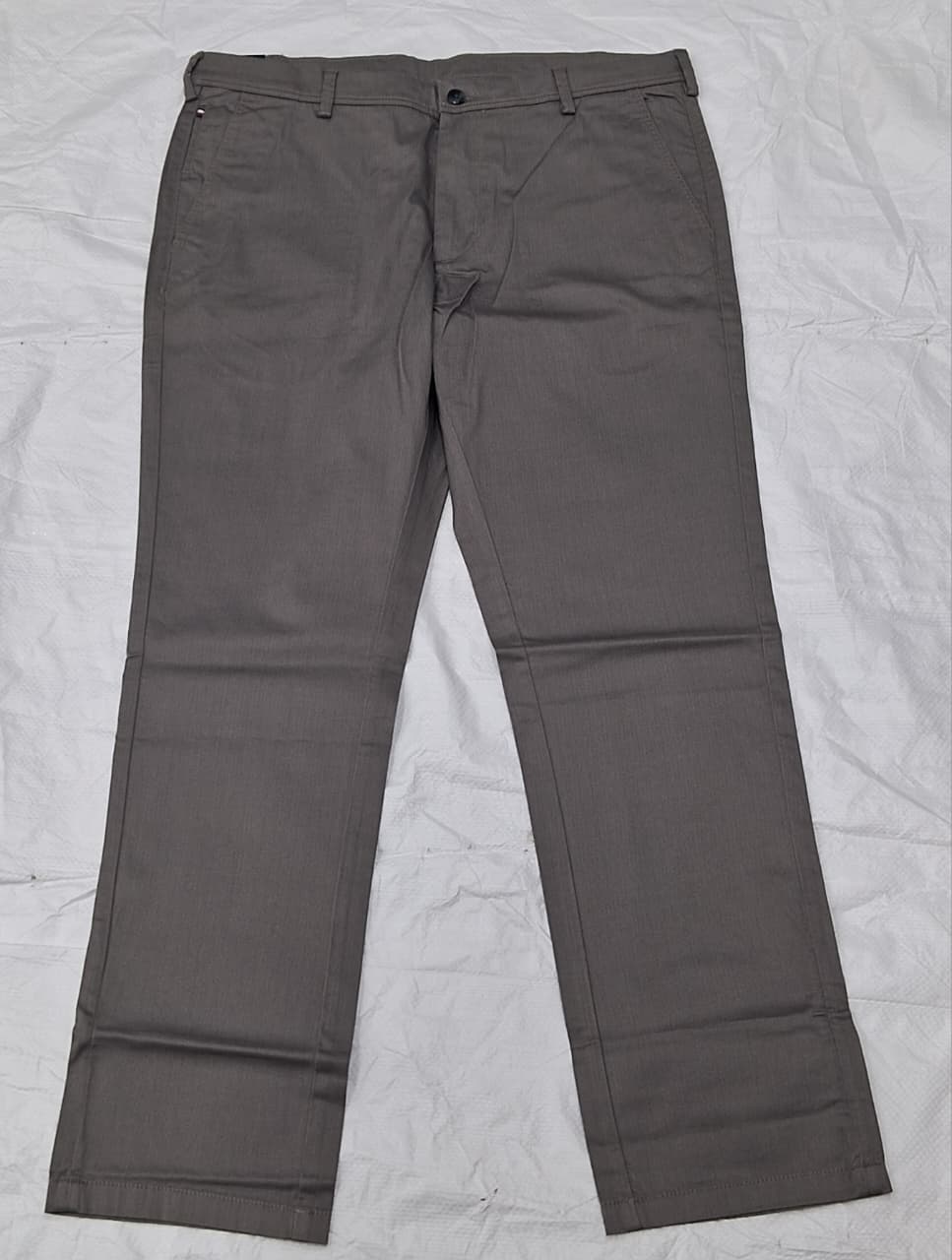
Buttons on formal trousers are typically flat and discreet, matched to the cloth. An inner button often anchors the fly extension behind the main fastening. The trousers below show a single button closure at the waist, a common finish on cotton and contemporary formal styles.
Grey trousers with a single button closure and slanted side pockets.
05–06
The front
The front panel sets the trouser's character: tailored and full, or clean and streamlined.
05 Front pleats
General tailoring knowledge
Pleats are folds stitched into the waistband that release fabric over the hip and thigh. Forward pleats open towards the fly and reverse pleats towards the pockets. Pleats add comfort when seated and help a fuller trouser drape into its crease. They are associated with classic tailoring and with today's relaxed silhouettes. Pleated styles are not clearly visible among the photographs we hold.
06 Flat-front construction
Seen in our photographs
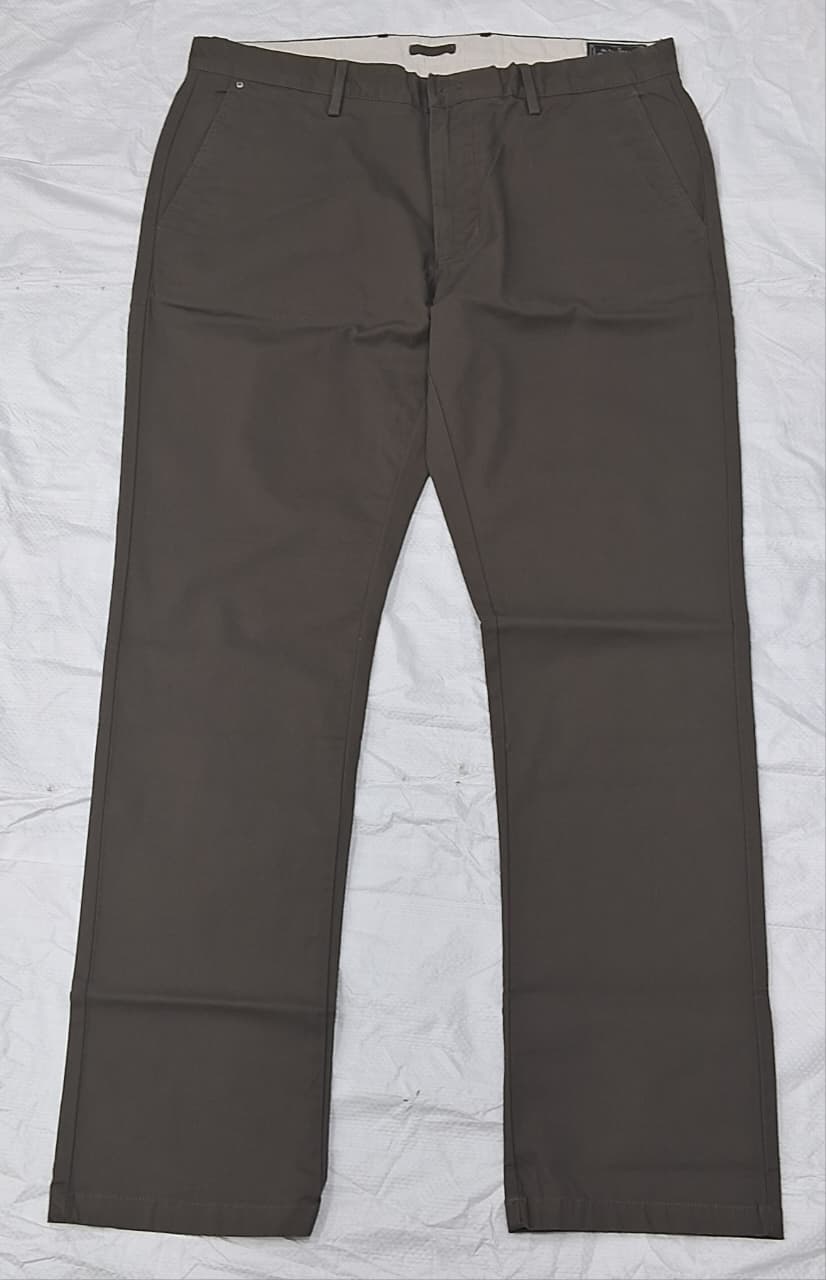
A flat front has no pleats; the cloth is shaped with darts or seams so the front lies smooth. The look is clean, modern and particularly flattering in slim and regular fits. Nearly every trouser photographed for Options Mall is flat-fronted.
Dark olive trousers: a flat front with slanted side pockets.
07–09
Pockets
Pockets must work without spoiling the line.
07 Pocket styles
General tailoring knowledge
Formal trousers use three main side-pocket styles: slanted (angled openings that are easy to reach), on-seam (hidden within the side seam for the cleanest look) and frogmouth (curved openings on the front panel, seen mainly in classic and vintage tailoring). Each sits differently on the hip.
08 Side pockets
Seen in our photographs
The trousers in our photographs predominantly use slanted side pockets. A well-made slanted pocket lies flat when standing, with no gaping. If it bows open, the trouser is likely too tight across the hip. Pocket bags in formal trousers are often made from a smooth cotton or blended lining that keeps bulk low.
09 Rear pockets
General tailoring knowledge
Rear pockets on formal trousers are usually jetted (a slit finished with narrow strips of fabric) and may close with a button or button-through flap. Jetted pockets lie flat and keep the seat clean. Our photographs show the trousers from the front, so rear pocket construction is described here in general terms.
10–12
Seams & lines
The hidden architecture that keeps the leg straight.
10 Seams
General tailoring knowledge
The side seams, inseams and seat seam give the trouser its shape. In tailored trousers the seat seam often has generous seam allowance so the waist can be let out or taken in. Seams should run straight down the leg; a twisting side seam usually means the cloth was cut off-grain.
11 Stitching
General tailoring knowledge
Formal trousers keep visible stitching to a minimum. Stitch length should be short and even, and seam allowances neatly finished inside, by overlocking or by binding. Stress points such as the base of the fly and pocket corners are reinforced with bar tacks.
12 Creases
Seen in our photographs
The centre crease runs down the front and back of each leg, ideally aligned with the grain of the cloth. It makes the leg look longer and straighter. Many formal trousers in our photographs show a sharp, pressed crease. Some makers set the crease semi-permanently so it survives washing.
Grey formal trousers: an extended waistband with the pressed crease beginning below it.
13–16
Finish & structure
Where precision becomes visible, and where the whole garment comes together.
13 Hems
Seen in our photographs
Formal trousers typically have a plain hem, blind-stitched so the stitches do not show on the outside. A heel guard (a strip of tape inside the back of the hem) protects the cloth from wear against the shoe. The photographed trousers show plain hems; length is usually finished to the wearer.
14 Cuffs
General tailoring knowledge
Cuffs, or turn-ups, are a folded band at the hem. They add weight that helps the trouser hang and suit fuller, pleated or straight cuts. A plain hem is generally considered more formal and suits slim fits. None of our photographed trousers clearly show cuffs.
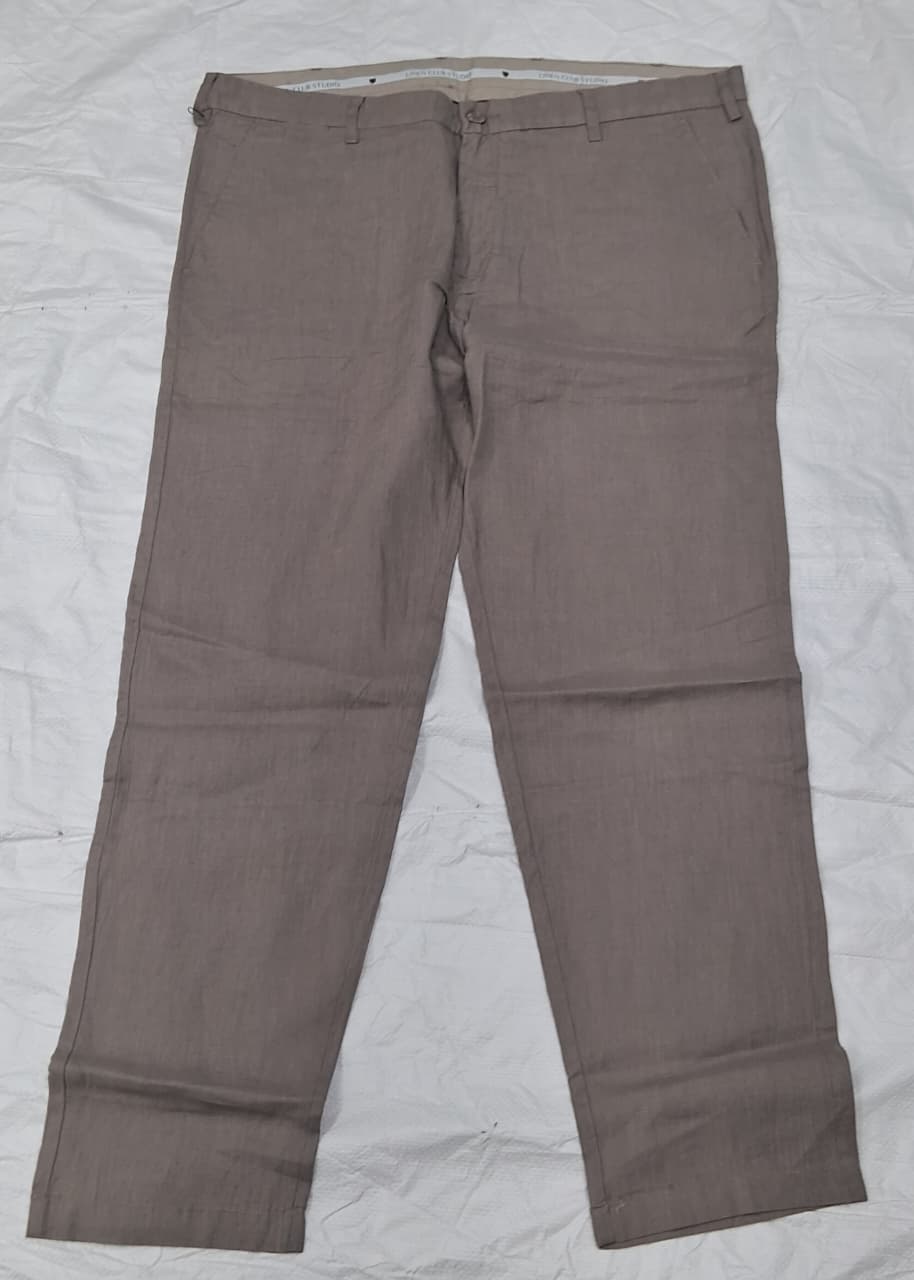
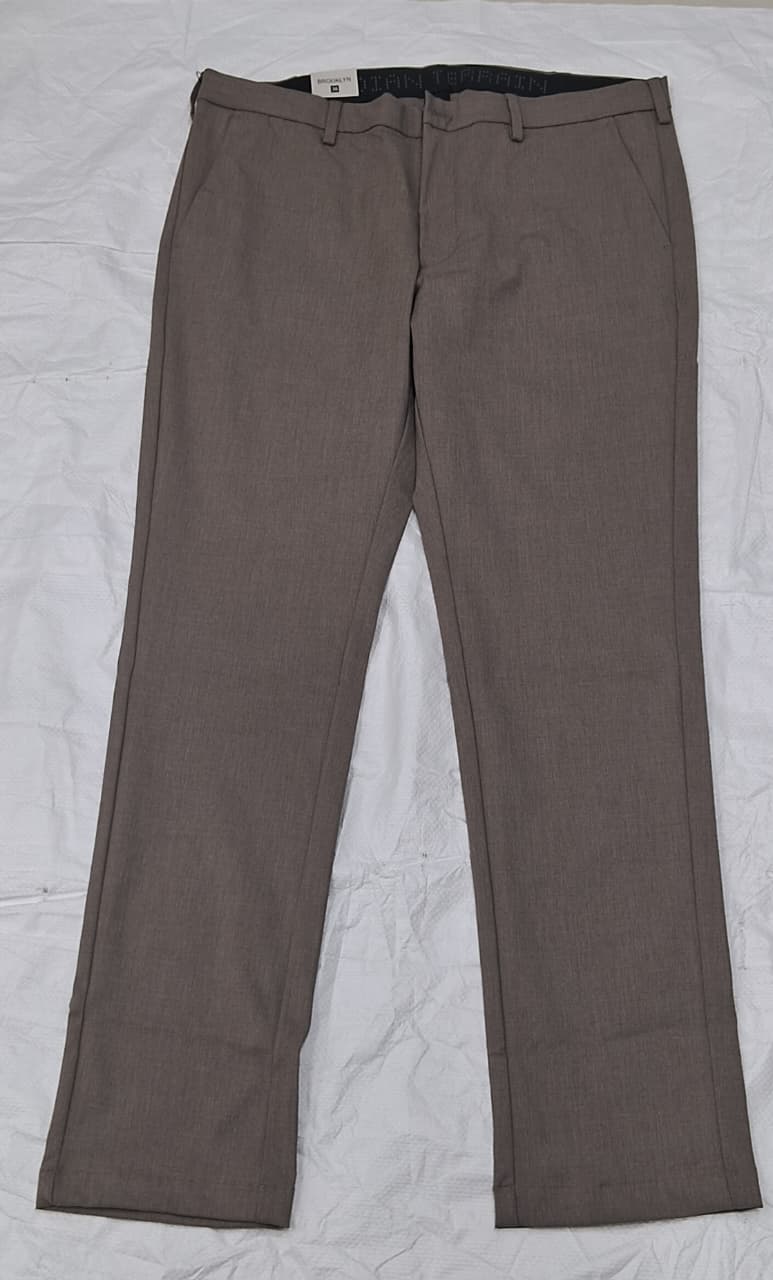
Left: taupe trousers with a lined inner waistband. Right: brown trousers with a dark contrast waistband lining.
15 Finishing details
Seen in our photographs
The inside of a trouser says as much as the outside. Faced waistbands, neat linings, clean seam finishes and pressed seams are signs of care. Several of our photographed trousers show contrast or lined inner waistbands, a detail often intended to improve grip and comfort, and to finish the interior neatly.
16 Overall garment structure
General tailoring knowledge
A well-constructed trouser hangs straight when held by the waistband: legs even, creases aligned, no twisting. Every element described here contributes to that balance. When you try trousers on, look at them from the side and back as well as the front. Structure shows most in profile.
See the details in person.
Construction is easiest to judge with the garment in hand. Contact Options Mall to ask about the trousers shown on this website.