Fits & Silhouettes

Fit is the first decision.

Before colour, before cloth, there is shape. This guide explains the formal trouser fits you will meet most often, the parts of the trouser that define them, and how to judge length, break and proportion for yourself.

Waist Seat & thigh Knee Leg opening Rise Crease
The measurement points that define a trouser's fit.

This is a general guide to men's trouser fits. Fit names and measurements vary between makers, so try trousers on rather than relying on a label. We have not published Options Mall-specific size charts here.

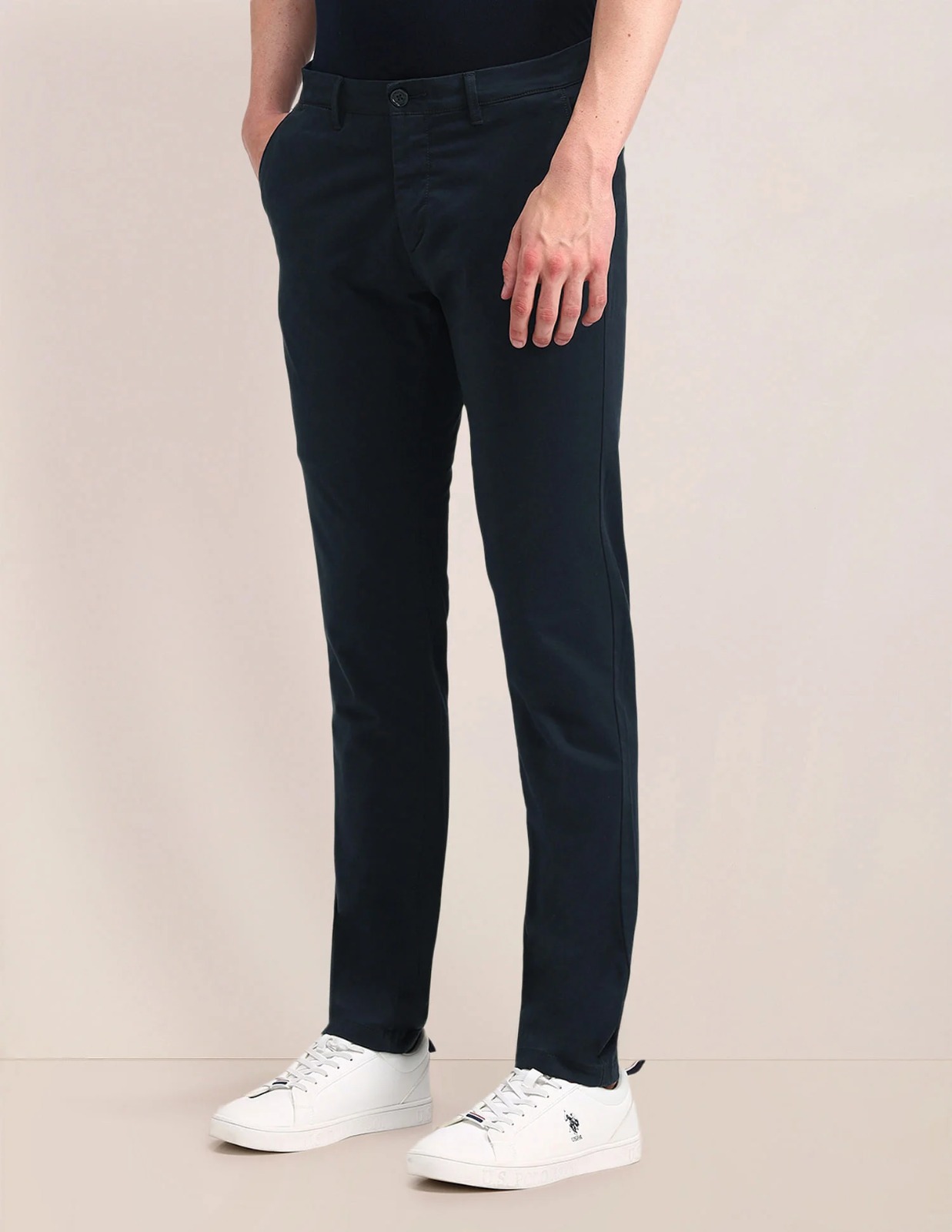
Navy slim-fit trousers worn with white trainers, showing a close, narrow leg

Fit 01

Slim Fit

A closer silhouette that follows the leg without gripping it.

Slim trousers reduce the fabric through the seat, thigh and knee, and usually finish with a narrower leg opening. The result is a sharp, contemporary line that pairs naturally with fitted shirts and shorter jackets. In the photograph, the navy trouser stays close to the leg all the way down, finishing neatly above a white trainer.

The challenge with slim trousers is movement. Good slim trousers still allow you to sit and bend without the fabric pulling across the front or the pockets flaring open. If you see horizontal creases radiating from the crotch, the fit is too tight rather than slim.
Suits

Leaner builds, modern offices, shorter jackets, and shoes with slimmer profiles such as loafers and minimal trainers.

Consider

Keep the length clean, with no break or a slight one. Extra length pools noticeably around a narrow opening.

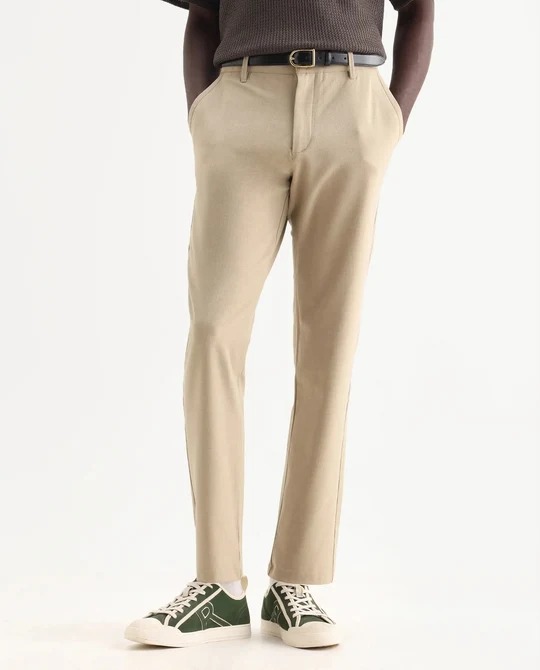
Beige regular-fit trousers worn with a dark knit, belt and canvas trainers

Fit 02

Regular Fit

The balance between structure, comfort and versatility.

A regular fit gives measured room through the seat and thigh, then narrows gently towards the hem. It is the fit most formal wardrobes are built on because it works across body types, sits well under almost any jacket and stays comfortable through long working days. The beige trousers here show that easy balance: relaxed at the top, tidy at the ankle.

Regular should never mean loose. Excess fabric that billows at the back of the thigh or folds over the shoe is a sign the size or length needs adjustment.

Suits

Most builds, long office days, travel, and anyone who values comfort as much as line.

Consider

A slight or half break usually looks most natural. Formal shoes with a little substance balance the leg.

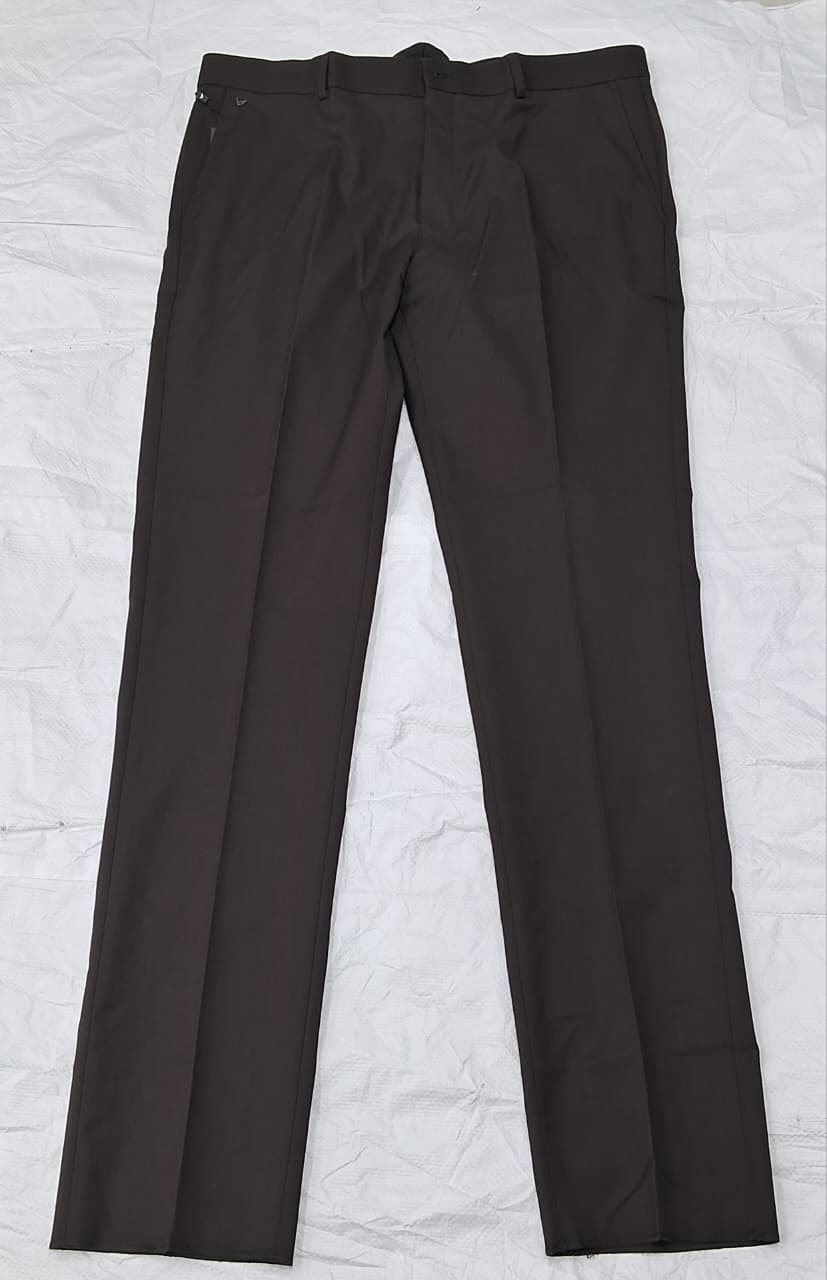
Dark brown straight-fit formal trousers with a consistent leg width

Fit 03

Straight Fit

Consistent leg proportions and a classic column.

In a straight fit, the leg keeps a similar width from the knee to the hem. Laid flat, as with these dark brown trousers, you can see how the outer edges run almost parallel. The effect is calm and traditional: a column of cloth that lengthens the leg and holds a pressed crease beautifully.

Straight trousers are a natural partner for classic formal shoes such as Oxfords and Derbies, whose weight balances the fuller opening. They also suit taller men and anyone who prefers a timeless line to a fashionable one.

Suits

Traditional workplaces, formal events, taller frames, and heavier formal shoes.

Consider

A half break often looks best; with no break, the wider opening can look short.

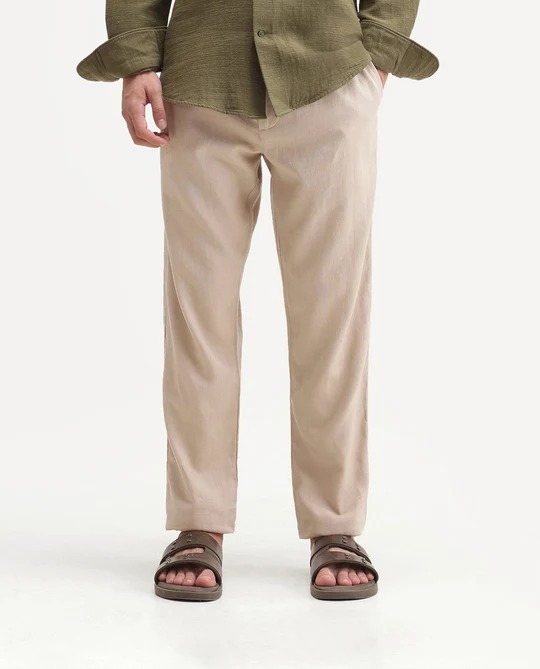
Beige relaxed trousers with an easy drape, worn with an olive shirt and sandals

Fit 04

Relaxed Tailored Fit

Ease and drape, still cut with intent.

Relaxed tailoring has become one of the defining shapes of recent menswear. The trouser keeps tailored details such as a defined waistband and pressed front, but gives more room through the seat and leg so the fabric drapes rather than skims. The beige trousers in this photograph move softly over the shoe, worn with an olive shirt and sandals.

The difference between relaxed and simply oversized is intention. A relaxed tailored trouser still fits at the waist and seat; the extra room is planned into the leg. It works best in fabrics with natural drape and in settings that welcome a softer formality.

Suits

Warm climates, creative workplaces, smart-casual dressing, and fabrics such as linen blends and soft cottons.

Consider

Balance the volume with a neat shirt tuck or a shorter knit. Very slim shoes can look lost under a full leg.

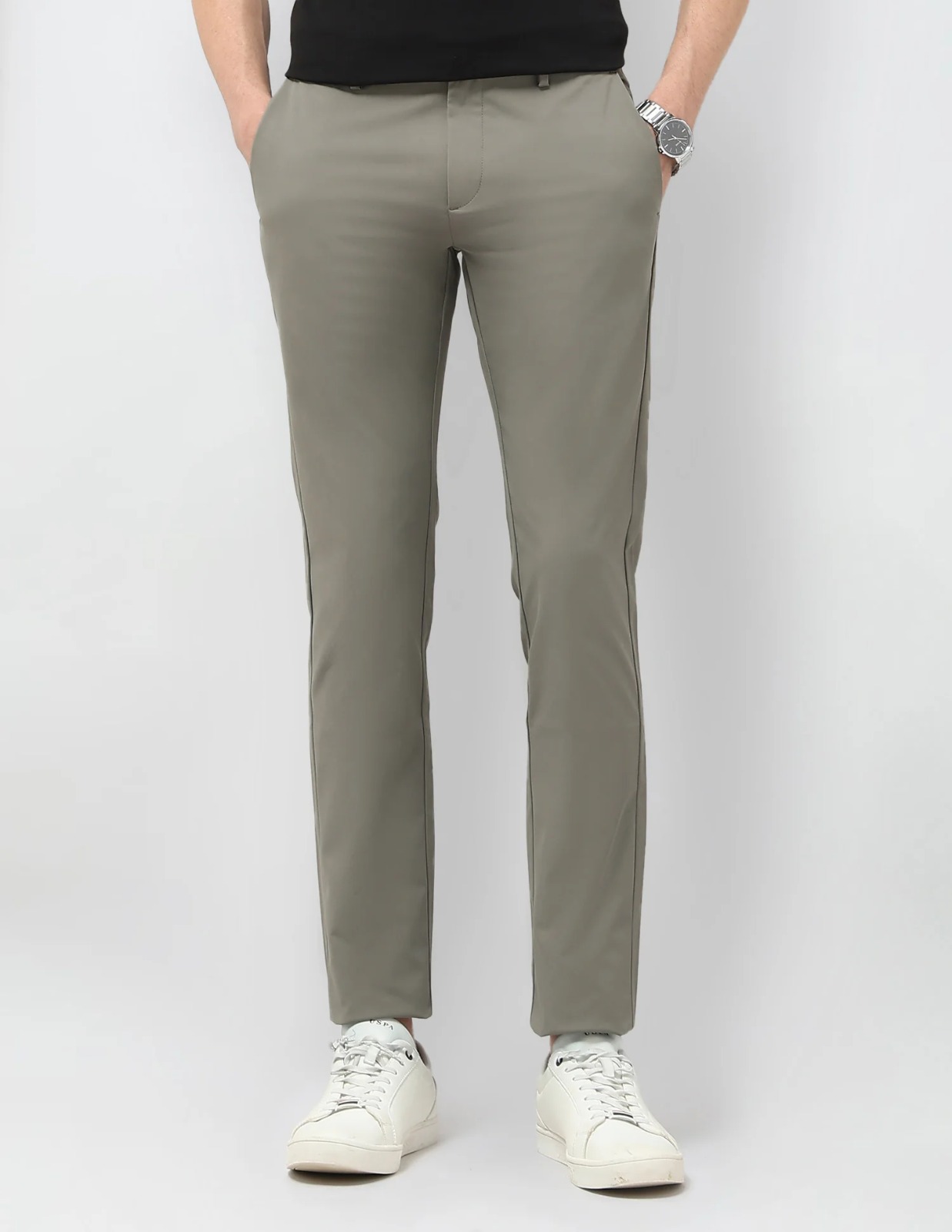
Sage tapered trousers narrowing towards the ankle, worn with white trainers

Fit 05

Tapered Fit

Room at the top, precision at the ankle.

A tapered trouser starts with comfortable room in the seat and thigh, then narrows noticeably from the knee to the hem. This gives a modern, athletic outline without the restriction of an all-over slim cut. Notice how the sage trousers here narrow towards a clean finish above the trainers.

Tapering suits men with stronger thighs who find slim trousers tight at the top, and it looks particularly sharp with a cropped or no-break length that shows the shoe.

Suits

Athletic builds, contemporary offices, smart-casual looks, loafers and minimal trainers.

Consider

Too sharp a taper can look dated or exaggerate the thigh. Aim for a gradual narrowing.

Front construction

Pleated or flat-front?

Pleated trousers

Pleats are folds of fabric stitched into the waistband at the front. They open when you sit or move, adding room through the hip and thigh, and they encourage the cloth to drape into a strong crease. Forward pleats open towards the fly; reverse pleats open towards the pockets. Single pleats are subtle; double pleats add more volume.

Pleats suit fuller cuts, higher rises and softer, drapier cloths, and they are central to the current return of relaxed tailoring. This is general tailoring knowledge; pleated styles are not clearly visible among the photographs supplied to us.

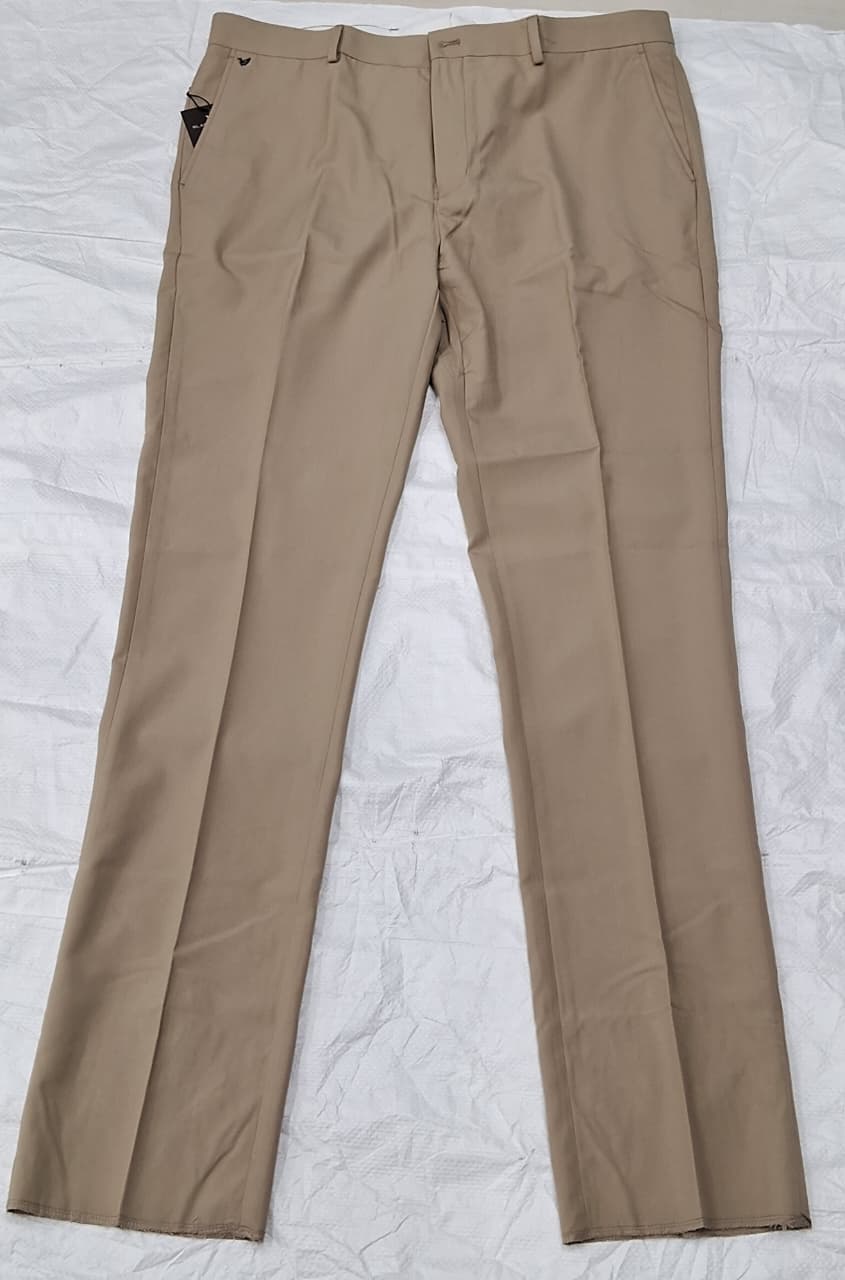
Khaki flat-front formal trousers with a smooth front panel and slanted pockets

Flat-front trousers

A flat front has no folds at the waist, so the fabric runs smoothly from waistband to crease. The result is cleaner and more streamlined, especially with slim and regular fits and mid-rise waists. The khaki trousers above show the effect: an uninterrupted front panel with slanted side pockets.

Nearly every formal trouser photographed for Options Mall is flat-fronted, which reflects how common this style is in contemporary office wear.

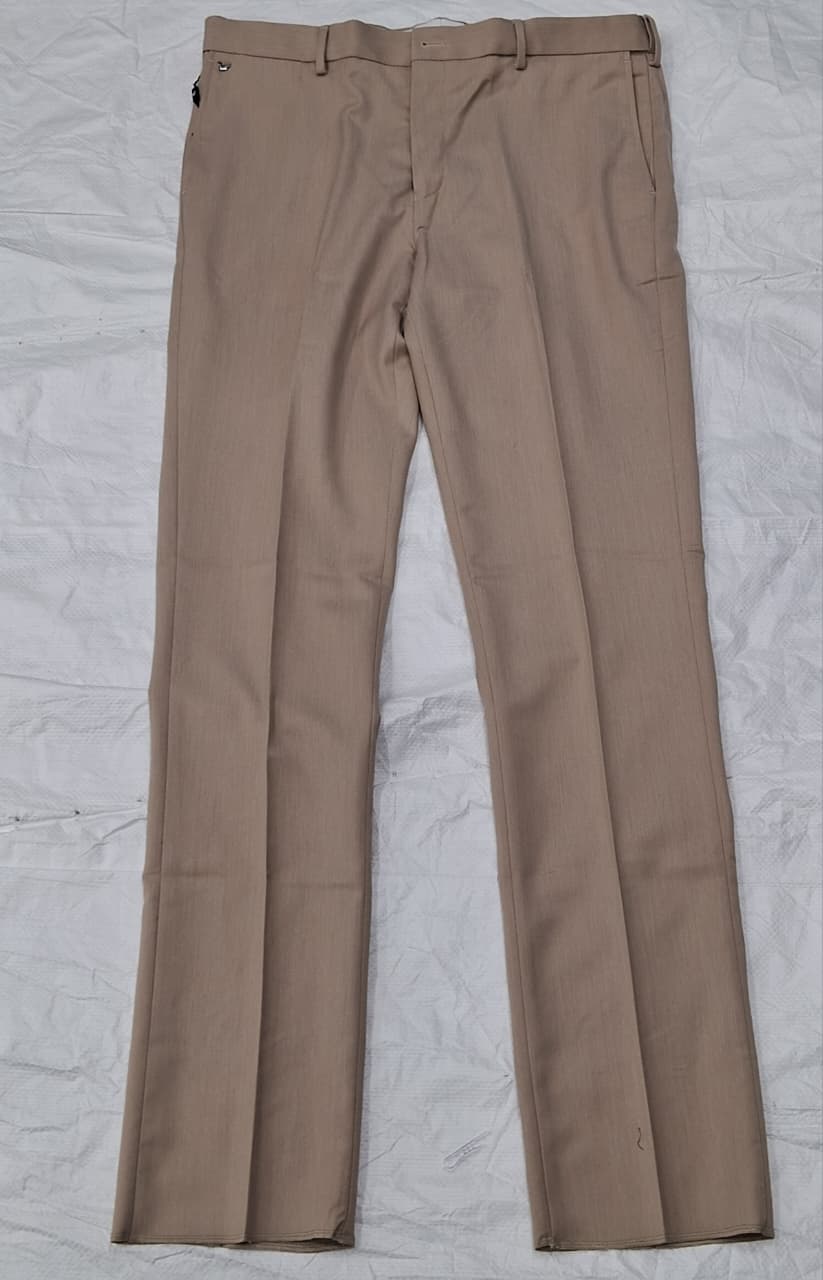
Camel formal trousers laid full length to show the leg line and hem
Camel formal trousers laid at full length: waist, seat, leg and hem in a single line.

The fit checklist

Ten points to check in the mirror.

  1. Waist positioning

    Formal trousers usually sit at or slightly below the natural waist. The waistband should stay level, not dip at the back, and hold without a belt doing all the work.

  2. Seat fit

    The fabric over the seat should be smooth. Horizontal pulling means too tight; loose folds beneath the seat mean too much room.

  3. Thigh room

    Pinch the fabric at the side of the thigh: roughly a finger's width of spare cloth is a common guide for comfort. Pocket openings that flare outward are a sign of strain.

  4. Knee shaping

    The leg should pass the knee cleanly. When you sit, the fabric should not tighten across the kneecap.

  5. Leg opening

    The opening sets the character of the trouser. Narrow openings feel modern; wider ones feel classic. It should cover part of the shoe without swallowing it.

  6. Trouser length

    Check length wearing the shoes you will wear with the trousers. Heel height and shoe shape change where the hem falls.

  7. Break

    The fold where the hem meets the shoe. See the guide below to choose between no break, slight, half and full.

  8. Hem finishing

    A plain hem gives the cleanest line; a turn-up (cuff) adds weight that helps the trouser hang. Some hems are cut slightly longer at the back.

  9. Shoe compatibility

    Slim openings flatter sleek shoes; straight and wide legs need shoes with presence. Consider both together.

  10. Proportion and balance

    Step back. Rise, leg width and length should look like they belong to the same garment and the same man.

Length

Understanding the break.

The break is the small fold that forms at the front of the trouser where the hem rests on the shoe. It is a matter of taste and of fit: slimmer legs usually look best with less break, fuller legs with a little more.

  1. No break

    The hem just meets the shoe. Sharp and modern; ideal for slim and tapered fits.

  2. Slight break

    A gentle dimple at the front. A versatile choice for most contemporary formal trousers.

  3. Half break

    One clear fold. Classic, and well suited to regular and straight fits.

  4. Full break

    A deeper fold resting on the shoe. Traditional and generous; best with fuller legs.

Slate blue trousers laid flat to show the leg opening and length
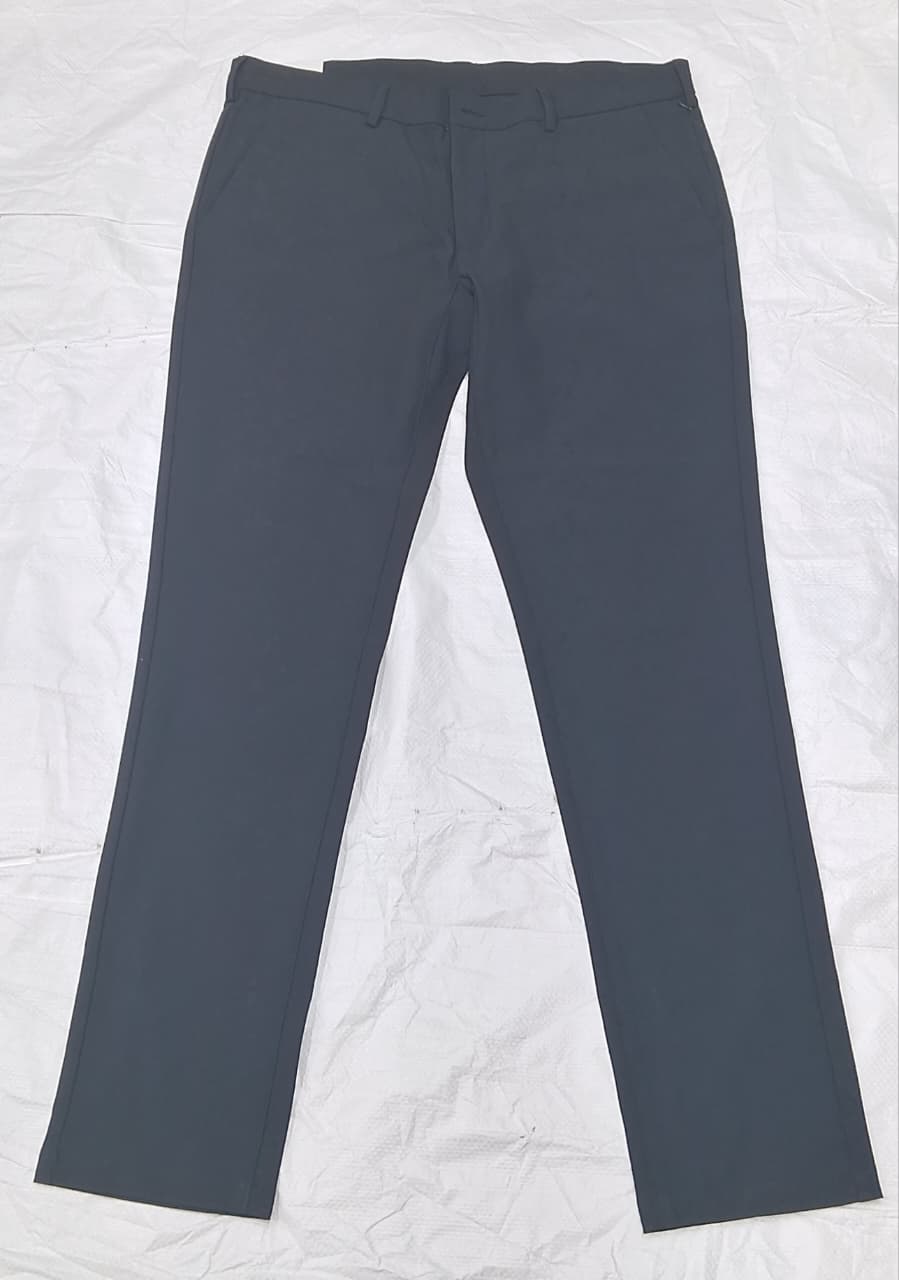
Slate blue trousers laid flat: the leg opening and hem decide how the break will look once worn.

Fits at a glance

FitSeat & thighKneeLeg openingTypical breakCharacter
SlimCloseNarrowNarrowNone to slightSharp, modern
RegularModerateModerateModerateSlight to halfBalanced, versatile
StraightModerateModerateSame as kneeHalfClassic, calm
Relaxed tailoredGenerousFullFullSlight to halfSoft, drapey
TaperedComfortableNarrowingNarrowNone to slightAthletic, contemporary